Best Exterior Lighting for Security: The Definitive Professional Guid
Designing a security lighting plan requires a departure from the “more light is better” fallacy. Effective illumination is not about eliminating every shadow; rather, it is about the strategic manipulation of contrast, visibility, and psychological deterrents. When homeowners or facility managers seek the best exterior lighting for security, they are often looking for a balance between visibility for occupants and the elimination of hiding spots for intruders. This tension defines the complexity of the subject. It involves a fusion of environmental psychology, electrical engineering, and architectural design.
The challenge lies in the dual nature of light. While it reveals threats, poorly placed fixtures can create “glare bombs” that blind security cameras or observers, effectively shielding an intruder in the high-contrast shadows adjacent to the light source. A truly robust system moves beyond the mere installation of floodlights. It considers the property’s perimeter, the specific vulnerabilities of entry points, and the integration with other security layers like physical barriers and digital monitoring.
This analysis moves past the superficial checklists found in DIY manuals. It treats exterior lighting as a dynamic infrastructure project. We will examine the interplay between color temperature and facial recognition, the mechanics of motion-sensing lag, and the systemic risks of relying on a single type of illumination. The goal is to provide a comprehensive framework for selecting and deploying the best exterior lighting for security based on rigorous environmental assessment and technical precision.
Best exterior lighting for security: A Multi-Perspective Analysis
To identify the best exterior lighting for security, one must first acknowledge that “security” is a subjective outcome driven by objective technical inputs. A common misunderstanding is that security lighting is a hardware category. In reality, it is a functional application of lighting design. A standard porch light becomes security lighting when its placement, lumen output, and control mechanism are optimized to support surveillance or deter unauthorized entry.
Oversimplification often leads to the “prison yard” effect—flooding an area with massive amounts of unshielded light. This creates two significant problems: light pollution that irritates neighbors and deep, impenetrable shadows created by the intense contrast. Security professionals view light through the lens of Uniformity Ratios. A space with moderate, even light is vastly superior to a space with pockets of extreme brightness and extreme darkness.
Another layer of complexity involves the observer. Is the lighting designed to help a human resident look out a window, or is it designed to optimize the performance of a 4K digital camera? These two objectives often require different color rendering indices (CRI) and beam angles. The best exterior lighting for security must therefore be evaluated against the specific “eyes” intended to monitor the space.
The Evolution of Protective Illumination
Historically, security lighting was purely reactive. Fires, and later gas lamps, were used to push back the literal and metaphorical darkness of urban environments. In the mid-20th century, the advent of High-Pressure Sodium (HPS) lamps introduced the era of the “yellow streetlamp.” While efficient, these lamps had poor color rendering, making it difficult to distinguish the color of a getaway vehicle or an intruder’s clothing.
The digital revolution shifted the focus toward LED (Light Emitting Diode) technology. LEDs offered the first real opportunity for granular control. We moved from “always-on” high-intensity discharge lamps to dimmable, color-tunable, and instant-on systems. This evolution changed the philosophy of security from “brute force” visibility to “intelligent” detection. Today, the conversation has moved into the realm of the “Dark Sky” movement, where security must be balanced against ecological impact and the reduction of light trespass.
Conceptual Frameworks and Mental Models
Understanding how to deploy lighting requires mental models that categorize space and behavior.
1. The Five Layers of Defense
This framework treats the property as a series of concentric circles:
-
Perimeter/Property Line: Deterrence through boundary definition.
-
The Grounds/Yard: Detection of movement within the private space.
-
The Building Envelope: Illumination of walls and windows to prevent scaling or tampering.
-
Entry Points: High-intensity, high-CRI light for identification at doors.
-
Interior Response: Lighting that activates inside when the exterior is breached.
2. The Prospect-Refuge Theory
Derived from environmental psychology, this model suggests that humans feel most secure when they have “prospect” (a wide, clear view of their surroundings) and “refuge” (a protected place to stand). Security lighting should provide the resident with prospect while denying it to the intruder. If your lights are positioned such that you are blinded when looking out, you have destroyed your prospect.
3. The OODA Loop in Lighting
Observe, Orient, Decide, Act. Effective lighting compresses this loop for the resident and expands it for the intruder. For example, a sudden but soft increase in light levels can disorient an intruder (breaking their loop) while giving a monitor enough information to observe and decide on a response.
Core Categories and Technical Variations
Choosing the best exterior lighting for security requires navigating several hardware archetypes. Each has a specific utility and a set of inherent trade-offs.
Comparison of Security Lighting Types
| Category | Primary Function | Advantage | Disadvantage |
| Continuous Illumination | Constant visibility | Reliable, no sensor lag | High energy cost, light pollution |
| Motion-Activated | Surprise/Alert | Energy efficient, psychological impact | Nuisance tripping, “blackout” periods |
| Dusk-to-Dawn | Automation | Hands-off management | Least flexible, hides sensor failures |
| Infrared (IR) Illumination | Stealth surveillance | Invisible to humans, clear for cameras | Provides no visual deterrent to humans |
| Smart/Integrated | Data-driven security | Remote control, scheduling | Dependency on Wi-Fi/Software |
Detailed Category Logic
Floodlights vs. Spotlights: Floodlights provide a wide “wash” of light, ideal for large backyards. Spotlights offer a narrow, intense beam, perfect for highlighting a specific gate or a dark corner behind a shed. The best exterior lighting for security usually employs a mix: floods for general situational awareness and spots for “choke points.”
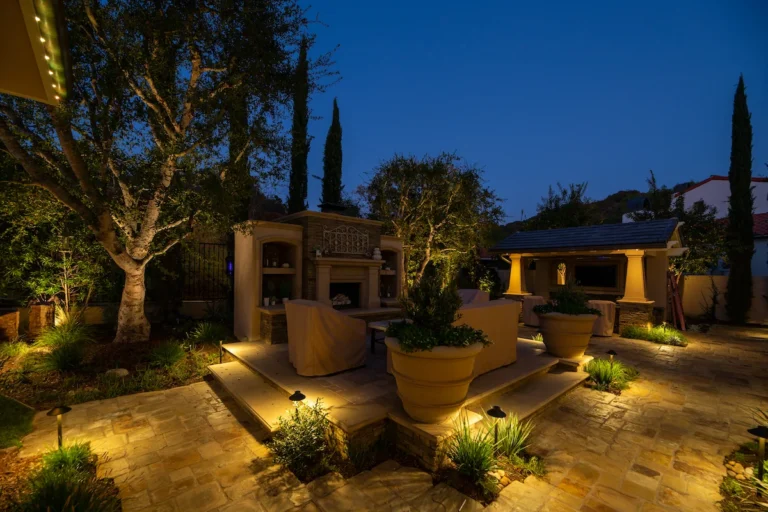
Pathway Lighting: Often dismissed as purely aesthetic, low-level pathway lighting serves a vital security function by defining the “expected” route for guests. Anyone moving outside these illuminated paths is immediately identified as an anomaly.
Scenario-Based Security Logic Best Exterior Lighting for Security
Scenario A: The Urban Row House
In dense environments, the primary risk is the narrow alley or the recessed entryway. Here, the best exterior lighting for security is often a high-mounted, shielded downlight. This prevents light from spilling into a neighbor’s window (legal risk) while ensuring the “threshold” is fully visible.
Scenario B: The Suburban Corner Lot
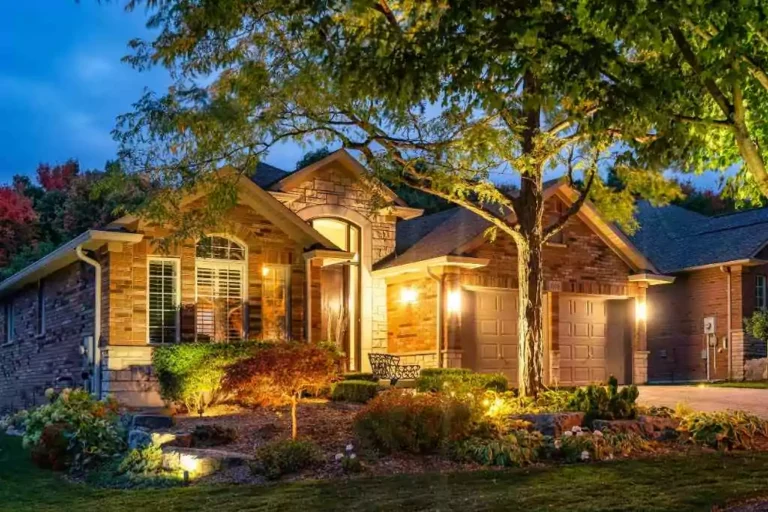
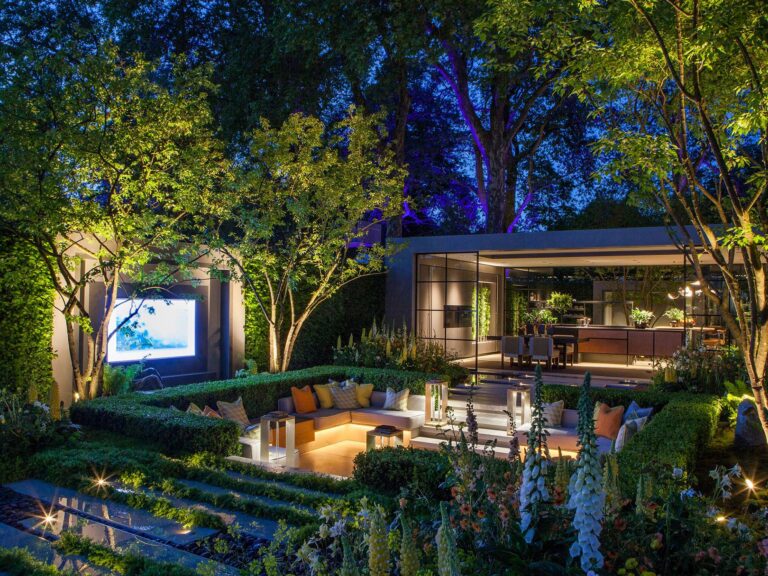
These properties have high exposure. The failure mode here is “dead zones” created by large trees. The strategy involves “moonlighting”—placing lights high in the canopy to filter down, mimicking natural light. This provides enough visibility to see a silhouette without the harshness of a ground-level flood.
Scenario C: The Rural Estate
In isolated areas, “always-on” lighting can actually help an intruder by providing them with a workspace. A more effective strategy is a silent “smart” alert that triggers internal lights while keeping the exterior dark, or using infrared illumination coupled with high-end cameras to maintain the element of surprise for the resident.
Planning, Cost, and Resource Dynamics
The financial commitment to security lighting involves more than the sticker price of a fixture. It is a lifecycle cost analysis.
Estimated Resource Allocation (USD)
| Component | Entry-Level (DIY) | Professional Integrated | High-End Architectural |
| Hardware (per fixture) | $30 – $100 | $150 – $400 | $500 – $1,200+ |
| Installation/Wiring | $0 (if replacing) | $200 – $500 per point | $1,000+ (trenching/conduit) |
| Annual Energy/Maint. | $20 – $50 | $40 – $100 | $100 – $300 |
The opportunity cost of choosing cheap, unshielded fixtures is often “light blindness.” If you spend $500 on cameras but wash them out with $20 floodlights, the total security ROI drops to near zero. True value is found in the longevity of the housings (IP65 or IP67 ratings) and the quality of the drivers, which prevent the flickering that ruins video footage.
Tools, Strategies, and Support Systems
-
Photometric Software: Professional designers use tools to map “foot-candles” across a site. This ensures there are no dark spots.
-
Color Temperature (Kelvin): For security, 3000K to 4000K is generally preferred. Anything warmer (2700K) is too dim for detail; anything cooler (5000K+) can be too harsh and distort colors.
-
CRI (Color Rendering Index): A CRI of 80+ is essential. If a witness describes a “dark car” that was actually red, the lighting has failed its security purpose.
-
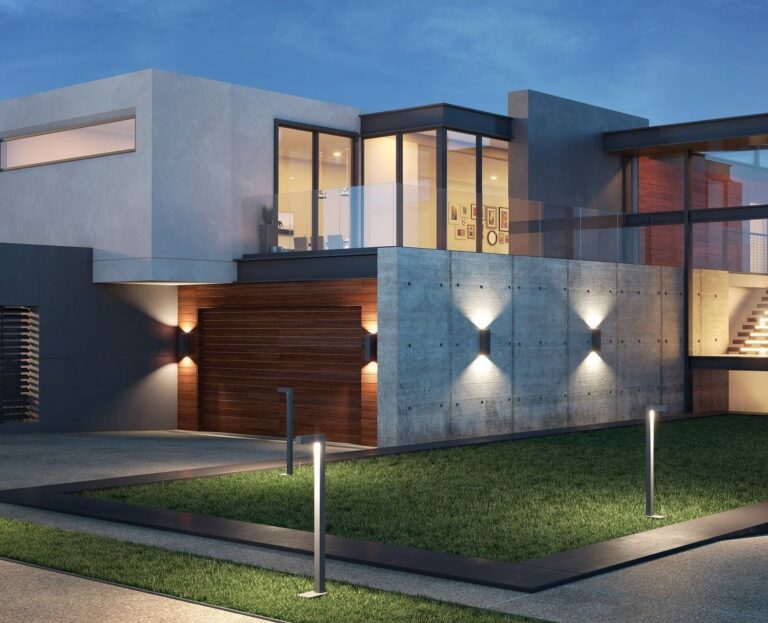
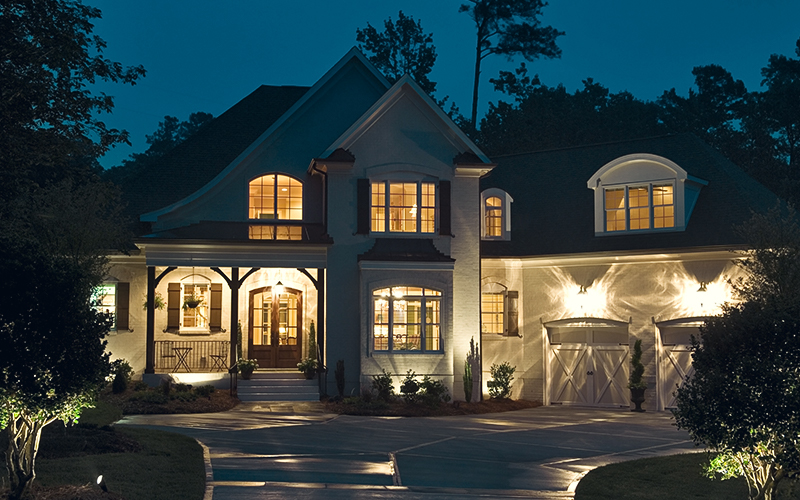
Shielding and Cut-offs: Full cut-off fixtures direct light only where it is needed—downward. This is the cornerstone of the best exterior lighting for security because it eliminates glare.
-
Smart Bridges: Systems that link lighting to doorbells and alarm panels.
-
Battery Backups: Solar-integrated LEDs provide a “fail-soft” mechanism during power outages, a common time for targeted intrusions.
The Risk Landscape: Failure Modes
The most common failure in security lighting is Over-Reliance. Lighting is a “passive-deterrent.” It does not stop a motivated intruder; it only makes their task more difficult or visible.
The “Flashlight” Effect: If an intruder knows your motion sensors are sensitive, they can “trip” them from a distance using a laser pointer or by tossing a branch. This creates “alarm fatigue,” leading the homeowner to eventually ignore the light or turn the system off entirely.
Compounding Risks:
-
Shadow Casting: A bright light placed behind a large bush creates a massive silhouette for an intruder to hide in.
-
Vandalism: Fixtures placed within arm’s reach can be unscrewed or spray-painted. The best exterior lighting for security is always mounted out of reach or protected by polycarbonate lenses.
Maintenance and Long-Term System Adaptation
A security system is only as good as its last inspection. A layered maintenance checklist should include:
-
Quarterly: Clean lenses of cobwebs and dust. Debris can reduce lumen output by up to 30%.
-
Bi-Annually: Test motion sensor range and “dwell time” (how long the light stays on).
-
Annually: Check for wire corrosion, especially in landscape lighting.
-
Triggers for Adjustment: If you plant a new tree or build a shed, the lighting “map” has changed. The system must be adapted to account for new shadows.
Measurement, Tracking, and Evaluation
How do you know your lighting is working?
-
Quantitative: Review camera footage at night. Are faces clear? Is there digital “noise” in the shadows?
-
Qualitative: Perform a “walk-through” as if you were an intruder. Where are the gaps? Can you reach the back door without crossing a beam?
-
Documentation: Keep a log of “nuisance trips.” If your lights turn on 20 times a night due to wind, they are not helping you detect a human. Adjust the sensitivity or the masking of the PIR (Passive Infrared) sensor.
Common Misconceptions and Oversimplifications
-
“Brightest is Best”: Extreme brightness causes the pupil to constrict, making it impossible for the human eye to see into the surrounding darkness.
-
“LEDs Last Forever”: While the diode lasts, the driver (the electronics) often fails within 5–7 years if exposed to heat.
-
“Motion Sensors Stop Crime”: Many criminals are bold enough to work in the light; the sensor’s job is to alert you, not just scare them.
-
“Solar is Just as Good”: For decorative use, yes. For mission-critical security, solar often lacks the “punch” or the battery capacity for a long winter night.
Ethical and Contextual Considerations
The quest for the best exterior lighting for security must be tempered by social responsibility. Light trespass—spilling your light onto a neighbor’s property—is increasingly being litigated as a nuisance. Furthermore, the “urban glow” has significant impacts on migratory birds and local insect populations. Responsible security design uses “Task Lighting” principles: illuminate the task (security), not the entire atmosphere.
Conclusion: Synthesizing the Protective Environment
Ultimate security is not found in a single high-wattage bulb. It is found in the thoughtful integration of moderate, uniform light levels, high-quality color rendering, and strategic placement that favors the observer over the intruder. The best exterior lighting for security is a system that remains invisible when not needed, provides clear information when triggered, and respects the boundaries of the surrounding environment. It requires constant evaluation and a willingness to move beyond “plug-and-play” solutions toward a nuanced, architectural approach to safety.