How to Manage Exterior Lighting Glare: A Professional Editorial
The visual integrity of an outdoor environment at night is often compromised by the very element intended to enhance it: light itself. While illumination is a prerequisite for safety and architectural expression, the uncontrolled emission of photons frequently results in a phenomenon known as glare. How to Manage Exterior Lighting Glare. Glare is more than a mere aesthetic distraction; it is a physiological interference that reduces visual acuity, compromises security, and contributes to environmental light pollution. For property owners and designers, the challenge lies in balancing the need for luminous intensity with the necessity of optical comfort.
In the modern landscape, the proliferation of high-intensity Light Emitting Diodes (LEDs) has paradoxically made glare management more difficult. Although LEDs offer superior efficiency and directional control, their high “luminous density”—the amount of light emerging from a very small surface area—creates intense “point sources” that can be agonizing to the human eye. Managing this requires a shift from simply providing light to carefully orchestrating its delivery. It demands an understanding of how light interacts with the human retina and the physical surfaces of the built environment.
A definitive approach to this issue avoids the “brute force” method of lighting, which relies on high-wattage floodlights to wash out shadows. Instead, it favors a layered, strategic application where the source of light remains obscured while its effects are highlighted. This article serves as a comprehensive reference for those seeking to master the nuances of outdoor illumination. We will examine the technical variables of beam angles, the psychological impact of contrast ratios, and the mechanical solutions available to neutralize optical interference.
Understanding “how to manage exterior lighting glare”
To effectively address how to manage exterior lighting glare, one must distinguish between the light that aids vision and the light that hinders it. Glare occurs when the range of luminance in a visual field is too high for the eye to adapt. In an outdoor setting, where the background is naturally dark, even a moderately bright light source can become a significant source of “disability glare”—a physical condition where the stray light inside the eye reduces the contrast of the retinal image, effectively blinding the observer to the surrounding details.
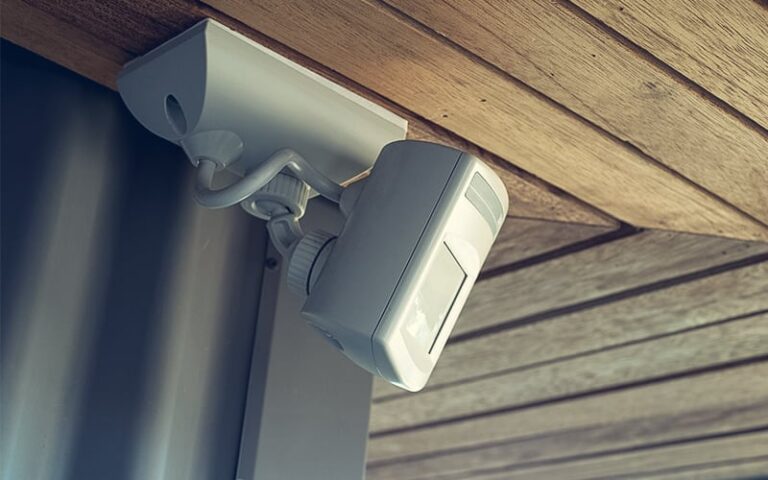
A frequent error in residential and commercial lighting is equating “more light” with “better security.” This oversimplification often leads to the installation of unshielded wall packs or floodlights. These fixtures create a high-contrast environment where the “hot spot” of the light is so intense that the human pupil constricts. Consequently, the areas just outside the light’s immediate reach become pitch black to the eye, providing perfect concealment for intruders. Thus, managing glare is, in reality, an essential component of professional security design.
Furthermore, the risk of over-illumination introduces “discomfort glare,” which, while not immediately blinding, causes eye strain and fatigue over time. This is particularly relevant in “transitional spaces”—areas where individuals move from a brightly lit interior to a dark exterior. A sophisticated management plan accounts for the “adaptation time” of the human eye, using graduated light levels to smooth the transition and prevent the jarring sensation of optical shock.
Contextual Background: From Glow to Glare
Historically, exterior lighting was limited by the physics of combustion. Gas lamps and early incandescent bulbs produced a relatively soft, warm glow with low luminous density. Because these sources were not inherently “blinding,” shielding was often treated as an aesthetic choice rather than a technical necessity. The primary concern was maximizing the meager output of the fuel source.
The mid-20th century saw the rise of High-Intensity Discharge (HID) lamps, such as Metal Halide and High-Pressure Sodium. These moved the needle toward industrial-scale brightness but remained somewhat diffuse due to the size of the glass envelopes. The real shift occurred with the “LED Revolution.” LEDs are semi-conductors that emit light from a microscopic point. This concentrated energy is what makes modern outdoor lighting so prone to glare. We have transitioned from an era of “glowing lanterns” to an era of “luminous needles,” necessitating a complete re-evaluation of how we shield and direct light.
Conceptual Frameworks and Mental Models
1. The Source-Task-Eye Triangle
This model evaluates the relationship between the light fixture (Source), the area being lit (Task), and the person looking at it (Eye). If the Eye has a direct line of sight to the Source, the design is flawed. The objective is to keep the Source out of the 45-degree viewing cone of the Eye.
2. The Uniformity Ratio
Rather than focusing on raw brightness, this model focuses on the ratio between the brightest and darkest spots in a scene. A ratio of 3:1 is considered excellent for visual comfort, whereas a ratio of 20:1 (common in poorly designed parking lots) is a recipe for extreme glare and safety hazards.
3. The Layering Principle
This framework treats light as a composition. By using “Ambient” light for general orientation, “Task” light for specific needs, and “Accent” light for beauty, the designer can use lower-wattage bulbs across more fixtures, reducing the “point-source intensity” of any single light and thus minimizing glare.
Key Categories of Glare and Optical Variations
| Glare Type | Description | Primary Cause | Solution |
| Disability Glare | Reduces the ability to see objects and detail. | High-intensity light scattering in the eye. | Shielding; indirect lighting. |
| Discomfort Glare | Causes an instinctive desire to look away. | High contrast between source and background. | Diffusion; frosted lenses; lower lumens. |
| Reflected Glare | Light bouncing off glossy surfaces (water/glass). | Poorly angled directional spots. | Polarizing filters; repositioning. |
| Blinding Glare | Temporary total loss of vision. | Direct view of a high-intensity diode. | Full cut-off fixtures; deep recessing. |
Detailed Real-World Mitigation Scenarios How to Manage Exterior Lighting Glare
Scenario 1: The Coastal Modern Residence
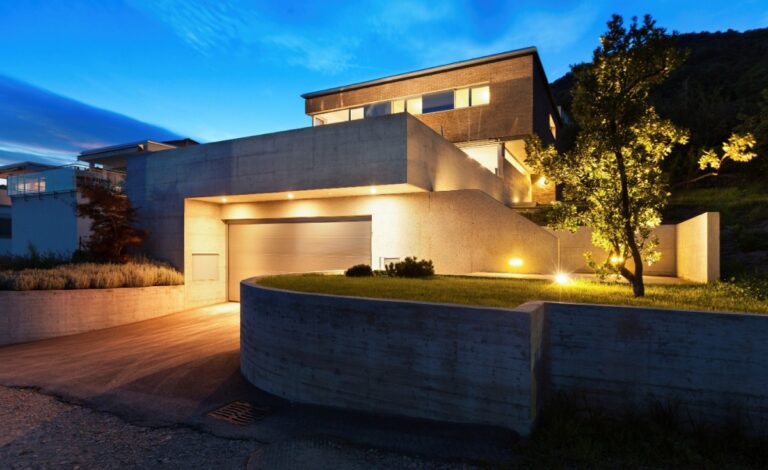
With expansive glass walls, a major risk is “interior reflection glare.” If the exterior lights are too bright or poorly aimed, they reflect off the windows, turning the glass into a mirror and preventing residents from seeing their own yard. The solution is to use “grazing” techniques where the light is aimed parallel to the exterior walls, illuminating the texture of the building without hitting the glass directly.
Scenario 2: The Public Parking Facility
Standard “shoebox” fixtures often leak light at high angles, hitting drivers directly in the eyes as they navigate the lot. The management strategy involves switching to “Full Cut-off” (FCO) optics, where the LEDs are recessed into the top of the fixture, ensuring that 0% of the light escapes above the horizontal plane.
Scenario 3: The Wooded Pathway
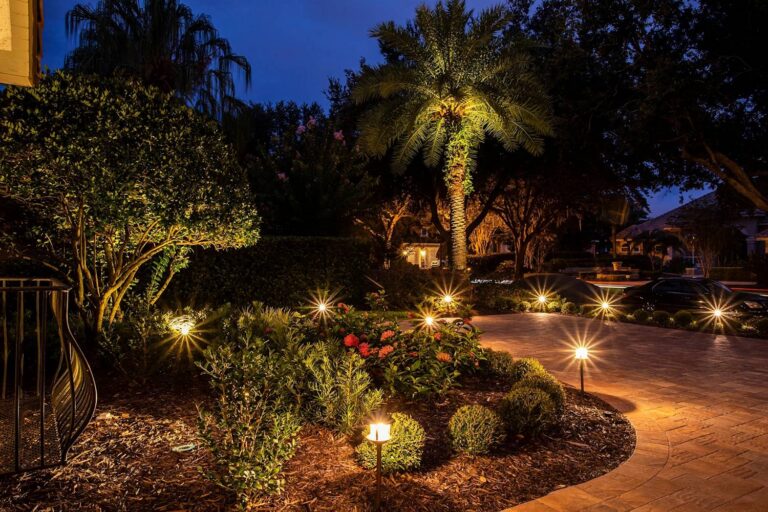
Path lights are frequently positioned too high, exposing the bulb to pedestrians. Logic dictates the use of “hat-style” or “bollard” fixtures that are less than 18 inches tall and have opaque tops. This ensures the path is lit, but the hiker never sees the filament.
Planning, Cost, and Resource Dynamics
The economic reality of glare management is that it often requires a higher upfront investment in “optics” but leads to lower energy costs because the light is more efficient.
Cost and Resource Allocation Table
| Strategy | Initial Labor/Cost | Energy Impact | Lifecycle Benefit |
| Shielding/Louvers | Low ($20 – $50/unit) | Neutral | Immediate comfort; low tech. |
| Smart Dimming | High ($500 – $2,000+) | -30% to -60% | Variable adaptation to darkness. |
| Indirect Lighting | Moderate | Neutral to +10% | Premium aesthetic; zero glare. |
| Optical Retrofitting | Moderate | -10% | Focused light reduces wasted lumens. |
Tools, Strategies, and Support Systems
-
Honeycomb Louvers: These are hexagonal grids that fit over a spotlight lens. They allow light to pass through straight but “trap” any light trying to escape at an angle, effectively killing side-glare.
-
Snoots and Barn Doors: External physical shields that extend from the fixture to “cut” the light away from windows or eyes.
-
Micro-Prismatic Lenses: These diffuse the “point-source” of an LED, spreading the light over a larger surface area to reduce intensity without losing significant lumens.
-
Astronomical Timers and Dimmers: Reducing light levels by 50% after midnight reduces the contrast ratio as the human eye fully adapts to the dark.
-
Anti-Reflective Coatings: Applied to the lenses of high-end fixtures to ensure the maximum amount of light exits the fixture rather than bouncing around inside and creating internal glare.
-
Beam-Angle Selection: Using a “narrow spot” (15 degrees) rather than a “wide flood” (60 degrees) allows for surgical illumination of a tree or statue without spilling light into the sky or a neighbor’s yard.
Risk Landscape: Taxonomy of Failure Modes
-
The “Black Hole” Effect: When glare from a bright light makes the surrounding area appear pitch black, creating a security vulnerability.
-
Corrosive Degradation: Shielding and louvers are often the first parts to corrode in coastal environments. When a shield falls off, a previously “safe” light becomes a major glare pollutant.
-
Reflective Miscalculation: Installing high-intensity lights near white-painted walls or light-colored stone. The wall itself becomes a secondary “glare source” via reflection.
-
Compounding Contrast: As a property’s foliage dies back in winter, lights that were once shielded by leaves are suddenly exposed, creating seasonal glare issues.
Governance, Maintenance, and Long-Term Adaptation
A glare-free environment is not static. It requires an “Adjustment Cycle”:
-
The “Drive-By” Audit: View the property from the perspective of a passing driver or a neighbor. If you can see the “source” of the light, the fixture needs a shield or a re-aiming.
-
Cleaning Regimen: Dust and hard-water spots on a lens can scatter light, turning a “clean beam” into a “hazy glare.”
-
Growth Pruning: Ensuring that as landscape plants grow, they don’t block the light’s intended path and force it to bounce back toward the observer.
Measurement, Tracking, and Evaluation Metrics
-
The Glare Audit Checklist: A documentation of every fixture’s BUG (Backlight, Uplight, Glare) rating.
-
Lux-to-Glare Ratio: Using a light meter to ensure that focal points are no more than 10 times brighter than the surrounding ambient light.
-
Occupant Feedback: In commercial settings, tracking complaints from employees or visitors regarding eye strain or “blinding” spots in the parking lot.
Common Misconceptions and Oversimplifications
-
“Frosted bulbs solve everything”: Frosting helps with discomfort glare but does little for disability glare if the lumen count is too high.
-
“Solar lights don’t have glare”: Because they are often cheap and use poorly designed plastic lenses, solar lights can be major sources of “clutter glare” despite their low power.
-
“Directional lights are the enemy”: Actually, directional lights are the solution. Glare is caused by un-directional light. The more controlled the beam, the easier it is to keep it away from the eye.
Conclusion: The Synthesis of Visual Comfort
To master how to manage exterior lighting glare is to move beyond the binary of “light and dark” and enter the realm of optical nuance. It is an acknowledgment that the quality of light is vastly more important than its quantity. By utilizing physical shielding, intelligent layering, and a deep respect for the physiological limits of the human eye, it is possible to create outdoor environments that are both exceptionally safe and visually serene. A property that is well-lit is one where you notice the textures of the stone, the silhouette of the trees, and the path ahead—never the lights themselves.